



























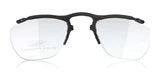
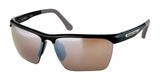
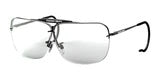
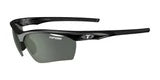
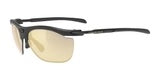
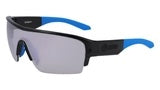
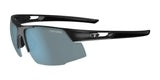
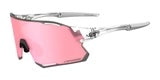








Prescription Shooting Glasses: Sight Picture and All-Day Comfort
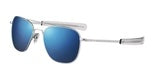
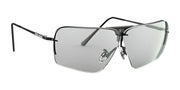
For competitive and recreational shooters who need vision correction, shooting glasses aren't just eyewear with a prescription bolted on — they're precision equipment. Sight picture alignment and comfort over a full day on the line matter more here than in almost any other category of prescription sport eyewear. This is also the category we know best: RE Ranger, made by Randolph Engineering, is Heavyglare's top-selling prescription line, and shooting sports remain a core part of our business.
Why Sight Picture Matters More in Shooting Glasses Than Almost Anywhere Else
In most sports, a slightly off optical center or minor distortion at the edge of a lens is a minor annoyance. In shooting sports, it can directly affect where you perceive your sight or target to be. Sight picture — the alignment of your eye, the gun's sighting system, and the target — depends on consistent, undistorted vision through the exact point on the lens you're actually looking through.
This is why prescription shooting glasses need more careful attention to:
- Frame fit and positioning — if the frame sits even slightly differently than intended, your eye may not be looking through the optical center of the lens when you mount the gun
- Lens curvature and prescription compensation — similar to the base curve distortion issue in wraparound sunglasses, but with lower tolerance for error given how precisely your eye needs to align
- Consistent frame fit session to session — a frame that shifts or slides during a competition changes your sight picture mid-string
A generic prescription frame, or a sport frame filled by a lab without shooting-specific experience, can get the prescription technically "correct" while still producing a sight picture that's subtly off for your actual shooting stance.
How Online Fitting Actually Achieves This Alignment
If you're used to getting fitted in person, it's a fair question: how does precise sight-picture alignment work when you're ordering online and no one's physically adjusting the frame on your face?
The honest answer is that it works because of what happens before the frame reaches you, not after:
- Your pupillary distance (PD) — the measurement that determines exactly where the optical center of each lens needs to sit — is captured directly from you, either from your existing prescription or through a guided measurement tool during ordering. This is the single most important number for sight-picture accuracy, and it's collected the same way whether you're ordering online or standing in front of an optician.
- Frames arrive squared and true from the manufacturer. There's no bending, no manual adjustment step, no technician eyeballing the fit against your face. The frame geometry is consistent and precise by design, which means the lab is grinding your prescription into a known, exact shape — not compensating for a frame that's slightly warped or unevenly adjusted.
- The lens is precision-ground to your PD and the frame's exact geometry together — but for shooting glasses specifically, this accounts for how the frame is actually worn in a shooting stance, not just straight-ahead primary gaze. Shooters typically tilt their head down toward the barrel or rib for a proper cheek weld, meaning the eye is looking through a lower, angled portion of the lens rather than dead center. Frame and lens positioning for shooting eyewear is calibrated with that stance in mind, which is part of why a purpose-built shooting frame outperforms a standard sunglass frame here — not just for style, but for where the optical center actually needs to sit for your head position when you mount the gun.
In some ways, this removes a variable rather than adding one: a physical in-person adjustment introduces human judgment and can drift over time (frames get bent, re-adjusted, bent again). A frame that arrives squared and stays that way, paired with an accurate PD, gives you a more consistent result than repeated manual tweaking.
For RE Ranger specifically, there's nothing different about the fitting process compared to any other prescription order we fill — it's your prescription, ground for your chosen frame and lens tint, using the same PD-and-precision-geometry approach described above.
Lens Tint by Discipline and Light Condition
Tint choice for prescription shooting glasses isn't cosmetic — it's functional, and it varies meaningfully by discipline and conditions:
- Bright, sunny conditions (clay/trap/skeet, outdoor ranges): Darker tints or polarized options reduce glare, though polarization can sometimes interfere with target visibility against certain backgrounds — this is a case-by-case conversation
- Overcast or low-light conditions: Lighter tints, yellow, or vermillion tones increase contrast against the sky or backdrop without over-darkening your overall vision
- Indoor ranges: Clear or very light tints, prioritizing clarity over glare reduction
- Variable conditions (a full day of shifting light): Photochromic (light-adaptive) lenses, or a lens kit with swappable tints for different segments of a match or day
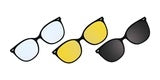
This is one of the reasons multi-lens kits — a single frame with several interchangeable tinted lenses — are so popular in serious shooting sports. Conditions change over the course of a match, and a single fixed tint is a compromise for at least part of the day.
Frame Weight and Fit Over a Full Competition Day
A frame that feels fine for the first ten minutes can become genuinely uncomfortable — or start to slip and change your sight picture — three hours into a competition. A few things matter more here than in casual eyewear:
- Balanced weight distribution, so the frame doesn't create pressure points behind the ears or on the nose over hours of wear
- A secure, consistent fit that doesn't loosen with sweat, gun recoil, or repeated mounting and dismounting
- Temple design that doesn't interfere with hearing protection, which most shooters wear simultaneously
This is a big part of why RE Ranger has become Heavyglare's top-selling prescription line — it's purpose-built for exactly this use case, not a general sport frame adapted for shooting.
Frequently Asked Questions
Can I get a genuinely strong prescription in shooting glasses? In most cases, yes — this overlaps closely with the complex prescription compatibility work we do for other curved sport frames.
Do I need polarized lenses for shooting sports? Not always — polarization can actually make it harder to see certain targets (like orange clays against certain skies) in some conditions. It depends on your discipline and typical shooting environment.
What's the difference between a shooting glasses "lens kit" and just buying one pair? A lens kit gives you multiple interchangeable tints in a single frame, so you can match lens choice to light conditions throughout a match or across a season, rather than owning several separate pairs of glasses.
Is RE Ranger only for competitive shooters? No — while it's built to competition-level fit, comfort, and optical quality standards, it's equally suited to recreational and hunting use.
How can you get the fit and alignment right if I've never been measured in person? Your pupillary distance (PD) is captured from your existing prescription or a guided measurement tool, and frames arrive squared and true from the manufacturer with no adjustment step. The lab grinds your lenses to that exact PD and frame geometry together — a precise, repeatable process rather than something that depends on in-person adjustment.
Shooting sports and a real prescription don't have to be a compromise. Explore RE Ranger prescription options or reach out and we'll help you get the sight picture, fit, and comfort right from the start.
You might also like


